
Carbomer in Water-Based Lubricants: Its Role in Gel Formation and Viscosity Control
Article Summary
Carbomer is a synthetic polymer commonly used as a thickening and gelling agent in personal care formulations. In water-based lubricant development, it may be evaluated for its ability to help create gel-like textures and adjust viscosity. This article introduces its basic properties and key formulation considerations for manufacturers.
Introduction
The texture of a water-based personal lubricant is an important part of product development. Some brands prefer fluid formulations, while others aim to create thicker products with a gel-like consistency.
To achieve a specific texture, manufacturers may evaluate different thickening and gelling agents. Carbomer is one of the materials commonly used in personal care formulation development.
Understanding how carbomer behaves in a formulation can help manufacturers determine whether it is suitable for their product requirements.
1. What Is Carbomer?
Carbomer refers to a group of high-molecular-weight crosslinked polymers of acrylic acid. It is widely used in personal care products as a thickening, suspending, and gelling agent.
One of its notable characteristics is its ability to develop viscosity under suitable formulation conditions.
Different carbomer grades may have different performance characteristics, so selecting an appropriate grade is an important part of formulation development.
2. How Does Carbomer Contribute to Gel Formation?
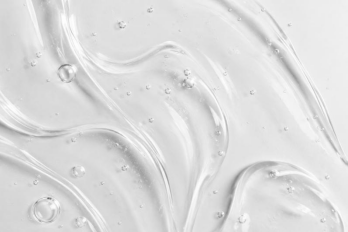
Carbomer can help create structured gel textures in suitable aqueous formulations.
Depending on the grade and formulation conditions, it may contribute to:
- Increasing product viscosity
- Developing a gel-like consistency
- Adjusting flow characteristics
- Supporting the desired product appearance
Carbomer generally requires suitable neutralization conditions to develop its characteristic thickening properties. The final performance can be influenced by pH, concentration, processing methods, and interactions with other ingredients.
3. What Should Manufacturers Consider?
When evaluating carbomer for a water-based lubricant, manufacturers should consider several technical factors.
Grade selection: Different grades may produce different viscosity and gel characteristics.
pH control: Formulation pH can influence carbomer’s thickening performance.
Neutralization: The choice and amount of neutralizing agent should be evaluated as part of the complete formulation.
Ingredient compatibility: Electrolytes and other formulation components may affect viscosity development.
Intended application: Products intended for intimate or mucosal contact require appropriate evaluation of the complete formulation.
These factors should be assessed through formulation trials rather than relying only on the general properties of the raw material.
4. Raw Material Selection and Formulation Development
For manufacturers and B2B brands, selecting a thickening agent involves understanding both its technical specifications and its behavior in the intended formulation.
Dongguan Yanxuan Biotechnology Co., Ltd., based in Dongguan, China, focuses on raw material research and manufacturing for personal care-related applications. The company provides B2B raw material supply and formulation development support.
For brands exploring gel-type personal lubricant products, understanding the characteristics of ingredients such as carbomer can help define product requirements and guide formulation evaluation.
Conclusion
Carbomer is a polymeric thickening and gelling agent that may be considered when developing gel-type water-based formulations.
Its performance depends on grade selection, pH, neutralization conditions, concentration, and compatibility with other ingredients.
For manufacturers, the key is to evaluate carbomer within the complete formulation and determine whether it supports the intended product texture and application requirements.
