
Water-Based Lubricant Ingredients: Understanding the Basic Formulation Components
Article Summary
Water-based personal lubricants rely on carefully selected ingredients to achieve their desired texture, lubrication properties, and product stability. This article introduces the basic ingredient categories commonly considered during formulation development and explains why selecting compatible raw materials is important for manufacturers and brands.
Introduction
Water-based personal lubricants are widely developed in the personal care industry because they offer flexibility in formulation and can be designed in different textures and product formats.
However, developing a water-based lubricant involves more than simply combining water with a few additional ingredients. Each component contributes to the overall formulation, influencing characteristics such as viscosity, application feel, and stability.
For manufacturers and brands, understanding the basic water-based lubricant ingredients is an important first step in product development.
1. Water: The Foundation of the Formulation
Water is generally the primary component of water-based lubricant formulations. It provides the main liquid phase in which other compatible ingredients can be incorporated.
The quality of water used during production is important because it can influence formulation consistency and microbial control.
Manufacturers should consider water quality, processing conditions, and compatibility with other ingredients when developing a water-based product.
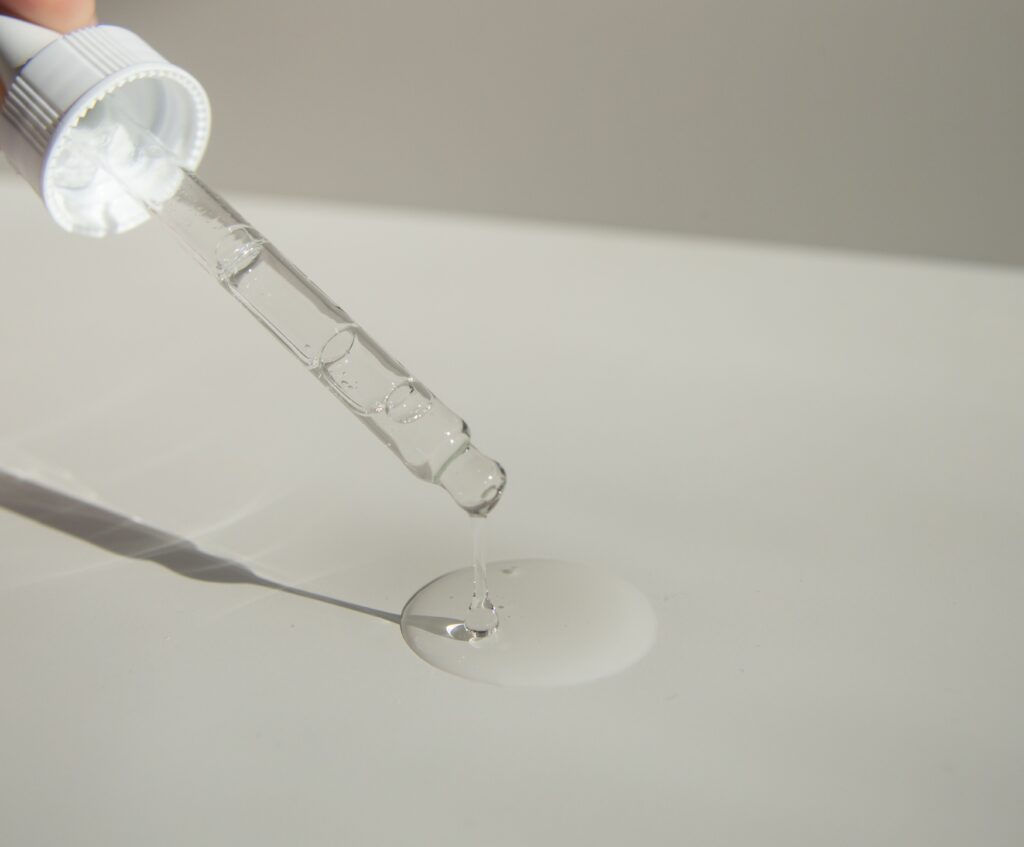
2. Humectants: Supporting Formulation Moisture Characteristics
Humectants are commonly used in personal care formulations to help attract and retain moisture.
Depending on the formulation requirements, ingredients such as glycerin, propylene glycol, and certain hyaluronic acid-based materials may be considered.
Their selection depends on several factors, including:
- Desired product characteristics
- Ingredient concentration
- Compatibility with the formulation
- Intended product application
It is important to remember that an ingredient commonly used in cosmetics is not automatically suitable for every intimate-use formulation. The complete formulation must be evaluated for its intended application.
3. Thickening Agents: Controlling Texture and Viscosity
Viscosity is one of the most noticeable characteristics of a personal lubricant.
Some products are designed to have a light, fluid consistency, while others are developed with a thicker gel-like texture.
Depending on the formulation, manufacturers may evaluate thickening ingredients such as:
- Hydroxyethylcellulose (HEC)
- Hydroxypropyl Methylcellulose (HPMC)
- Carbomer
- Xanthan Gum
These ingredients have different thickening and formulation characteristics. Their performance can be affected by concentration, pH, processing conditions, and interactions with other components.
Choosing an appropriate thickening system helps manufacturers develop a texture that matches the intended product design.
4. Why Raw Material Compatibility Matters
Selecting individual ingredients is only part of the formulation process. Manufacturers must also understand how different raw materials interact within the complete system.
For example, a thickening agent may behave differently depending on the presence of humectants, botanical extracts, salts, or other formulation components.
Before commercialization, the finished product should undergo appropriate compatibility, stability, microbiological, and safety evaluations based on its intended use and target market requirements.
5. Working with a Raw Material Manufacturer
For brands developing water-based personal lubricants, access to suitable raw materials and formulation support can help simplify product development.
Dongguan Yanxuan Biotechnology Co., Ltd., based in Dongguan, China, focuses on raw material research and manufacturing for personal care-related applications.
As a raw material manufacturer, Yanxuan provides B2B raw material supply and formulation development support. The company works with business customers to consider ingredient characteristics, formulation requirements, and product development objectives.
For brands exploring new water-based lubricant products, understanding the role of each ingredient category can provide a useful starting point for selecting materials and defining formulation requirements.
Conclusion
Water-based lubricant formulations typically involve several important ingredient categories, including water, humectants, and thickening agents.
Each component contributes to the overall characteristics of the finished product. Therefore, ingredient selection should consider not only individual material properties but also compatibility within the complete formulation.
For manufacturers and brands, working with an experienced raw material production partner can support more informed ingredient selection and formulation development.
Dongguan Yanxuan Biotechnology Co., Ltd. provides B2B raw material supply and formulation development support to customers exploring personal care and lubricant formulations.
